

Member Spotlight – Charles Clerecuzio, P.E., CPIP
Long-time ISPE Member and Volunteer, AIChE's 2012 Chemical Engineer of the Year
and one of the first-ever Certified Pharmaceutical Industry Professionals (CPIPs) shares his
story.

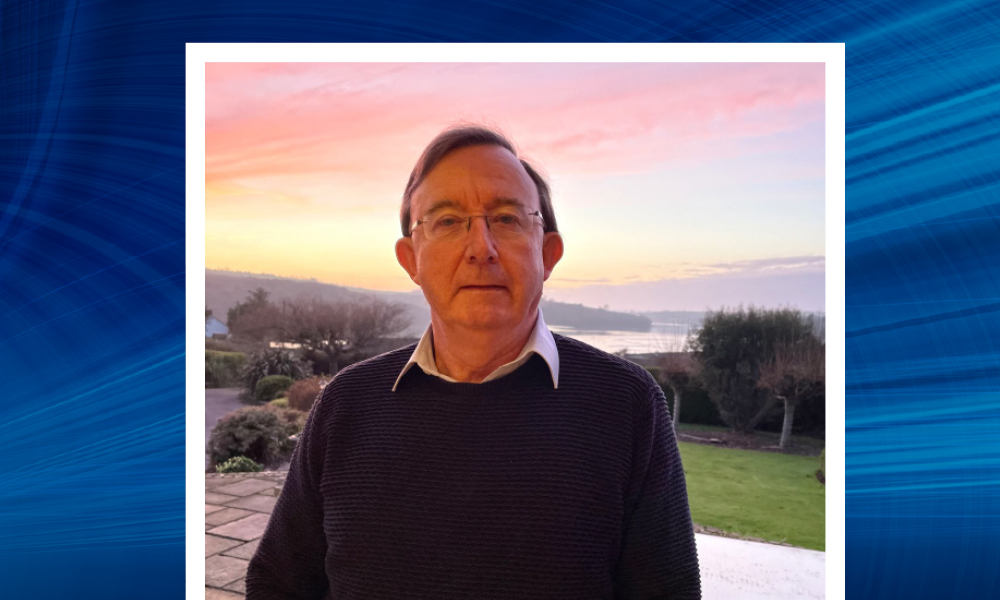
Our Member Spotlight for April is Charles “Chuck” Clerecuzio, P.E., CPIP. Chuck has been an active ISPE
Member for 21 years, and is involved with numerous ISPE initiatives and committees, including the
Professional Certification Commission (PCC), the independent board responsible for overseeing the Certified
Pharmaceutical Industry Professional™ (CPIP™) credential. Recently, Chuck was named 2012 Chemical Engineer of
the Year by the American Institute of Chemical Engineers (AIChE).
Chuck currently serves as Chief Operating Officer for Bard Holding, Inc. In this role, he is responsible
for development of Bard Holding’s operational plan and direction and oversight of the company’s R&D,
process development, engineering, system deployment and supply chain activities. He has held both management
and line positions at major engineering and construction companies including AMEC, IPS, Burns & Roe,
Morrison Knudsen / Washington Group, Fluor Daniel, Davy McKee, Jacobs and Life Sciences.
Chuck was one of the first ever CPIPs certified globally. He is Past President of the Delaware Valley
Chapter of ISPE. At the international level, he has chaired the University Relations Committee, CPIP
Eligibility Committee and served on the Biotech Community of Practice Steering Committee and Student
Development Committee.
Aside from his ISPE responsibilities, Chuck is a member of the Industrial Advisory Board for Chemical
Engineering for Rutgers University, Rowan University and the University of Akron. He has led K-12 Community
Outreach to create interest in the STEM (science, technology, engineering and math) subjects. He is also a
Board member and past chair of the Delaware Valley Section of AIChE.
Q. Congratulations on being named AIChE’s Chemical Engineer of the Year. Can you tell us about the
accomplishments in your career that led to this honor?
A. I think the key has been my desire to give back to the profession. One of my early managers encouraged
the young engineers to get involved with ISPE. I did so, as a member of the NJ chapter at the time. I found
it a valuable way to gain knowledge, build a network of trusted advisors and stay current on critical
industry trends. As I had the opportunity, I became involved with AIChE and various universities as an
adjunct professor and Industrial Advisory Board member. I am grateful for the opportunity to assist young
engineers and scientists in their career development and growth. Mentoring is one of the best things we can
do as professionals.
Q. How did you get interested in engineering and the Life Sciences industry? Were you always
interested in those fields, or did an opportunity present itself that made you decide to pursue those
disciplines as a career?
A. I have been always interested in math and science, particularly the biological sciences. My senior year
in high school, in addition to AP Calculus and AP Physics (typical subjects for students going to college for
engineering), I also elected to take AP Biology and really enjoyed it. I guess that was an early indicator of
my leaning towards the life sciences. My undergraduate degree is in the life sciences. I really became hooked
on microbiology and genetics. Genetic engineering was just emerging as a field and I was lucky enough to
perform research in this area my senior year of college. I pursued my Masters in Chemical and Biochemical
Engineering at Rutgers because I became interested in scale-up and large scale systems. I have spent most of
my career in helping to scale-up and industrialize processes to turn great ideas into tangible, marketable
products. It has been very rewarding.
Q. Tell us about your career trajectory so far. What are your proudest moments and achievements?
What have been your biggest challenges?
A. My proudest moment was being selected as the AIChE Delaware Valley Section (DVS) Chemical Engineer of
the Year for 2012. Knowing my peer group in the DVS of AIChE makes it even a greater honor. They are truly
some of the best and brightest in our industry. After that, obtaining my Professional Engineer (P.E.) license
and becoming a Certified Pharmaceutical Industry Professional (CPIP). Most of my biggest challenges have come
on some of the projects I have worked on. I have worked on a number of fast track projects that required
“unconventional” project management techniques to ensure on time completion while maintain the project budget
and quality of the processes and products.
Q. How did you get involved in ISPE? How do you think being an ISPE Member has helped your
career?
A. As a young engineer, my manager was very involved with the New Jersey Chapter of ISPE, including being
Chapter President at one point. He made an offer to some of the young engineers who wanted to get involved
with ISPE. If we helped set-up, and worked the door taking payment and filling out name tags, he would pay
for our annual membership and for us to attend the monthly meetings. A few of us took advantage of this
opportunity, and I am still a member 21 years later. This opportunity allowed me to network with senior
people in the industry to whom I would not have had access to otherwise; it also taught me the value of being
a Volunteer. I have been involved with the New Jersey, Great Lakes and Delaware Valley Chapters. I cannot
measure the tremendous value I have received from being an ISPE Member. I have obtained most of my positions
through networking with other ISPE Members. My ISPE peers have been a continuous source of technical and
leadership knowledge and I have made some life-long friends through my involvement with ISPE.
Q. What motivates you to stay so active in ISPE, given your many other professional
responsibilities?
A. Over its history, ISPE has always stepped up to address critical needs in our industry. These solutions
included training and forums for discussion as well as the Baseline® and Good Practice Guides.
Being actively involved with ISPE and its committees has always allowed me to stay at the forefront of new
trends and developments. I have also received a great deal of personal satisfaction from my ISPE involvement.
Most of my recent involvement has been around the CPIP credential. I am currently serving on the Professional
Certification Commission (PCC).
Q. Tell us about your work on the Professional Certification Commission. Why did you get involved,
and why do you think CPIP is important to the pharmaceutical industry and to our Members?
A. The Professional Certification Commission (PCC) oversees the CPIP credential. As one of the first
CPIPs, I believe strongly in this credential and feel a certification like this strongly benefits our
industry by setting a baseline level of knowledge for pharmaceutical industry professionals. Additionally,
the credential now provides a roadmap for career development, regardless of your years of experience or what
point you're at in your career. The recent changes to focus the CPIP as more of a practioner credential will
open it up to more people and increase its value. We have run a few study groups out of the Chapters and have
seen an increase in interest in the credential. Now is the time to get involved and pursue certification.
Q. Tell us about the other ISPE committees and projects you participate in. What motivated you to
become involved in them?
A. I was one of the founding Members of the Student Development Task Team, which later became the Student
Development Committee. I have always liked working with students and have served as an adjunct professor at
both Rutgers University and Rowan University. I also helped to start, and chaired, the University Relations
Committee, which looked at better ways ISPE and universities could collaborate. One of the great initiatives
that came out of this committee was the K-12 Outreach program. I have also served on the Biotech COP Steering
Committee and as a chapter lead for the new Bioprocess Guide. I have also been involved with Student
Activities for the Delaware Valley Chapter.
Q. Over the course of your career, what are the most significant changes you’ve seen in the
industry? Where do you think the industry is headed?
A. In my opinion, we are in the midst of one of the greatest changes in our industry. Globalization has
made our world smaller, and we are required to do more, faster, with less. Advances like personalized
medicines are changing the ways we manufacture products, as well as the overall economics. The increase in
biologics has created new challenges in distribution (cold chain). Biosimiliars will also continue to become
part of the equation. The industry is poised to help more people than ever before, but getting those
medicines to the right people, in a timely fashion and for an affordable price will be the challenges faced
by the scientists and engineers in coming years.
Q. Change has been a constant theme for ISPE in the past year or so. How do you think those
changes will affect Members and Volunteers?
A. The changes will benefit the Members. Most of the changes I have seen have been centered around
“bringing it to the membership.” Whether it is technical knowledge, training, networking, discussion forums
or CPIP study groups, ISPE has been focusing on delivering its services and content in a more accessible way
to its Members. This has been accomplished through greater Chapter involvement and distance learning tools
such as on demand webinars.
Q. What’s your favorite thing about being an ISPE Member and Volunteer?
A. The camaraderie is what I like the best. When you have a challenge, you can discuss it openly with your
peers. Everyone can rally around the problems and help drive a solution in a non-judgmental fashion. Other
times, we all can chat about trends, where we think the industry is going and higher-level strategic
views.
Q. What advice would you give to our Student Members and Young Professionals who are either
preparing to enter or just getting started in the industry?
A. Get involved with ISPE! Like everything, you will get out of it what you put into it. There are many
opportunities to get involved at both the local and international levels. A small investment of your
volunteer time will pay large dividends in the benefits you will receive. Pick an area you are passionate
about and get involved.